vdesk: Visualizing AI Agent Activities in a Retro 16-bit Office
Explore vdesk, an experimental project that brings AI agent internal states to life in a nostalgic 16-bit virtual office environment.
Published on • March 9, 2026
AI Assistant

The world of AI agents can often feel like a “black box.” We send a prompt, wait for a few seconds, and receive a response, but the internal processes—the “thinking,” the “acting,” the “idling”—remain hidden behind the scenes. vdesk (Virtual Agent Office) is an experimental project that aims to change that by providing a tangible, visual representation of AI agent states.
Bringing AI to Life with Retro Aesthetics
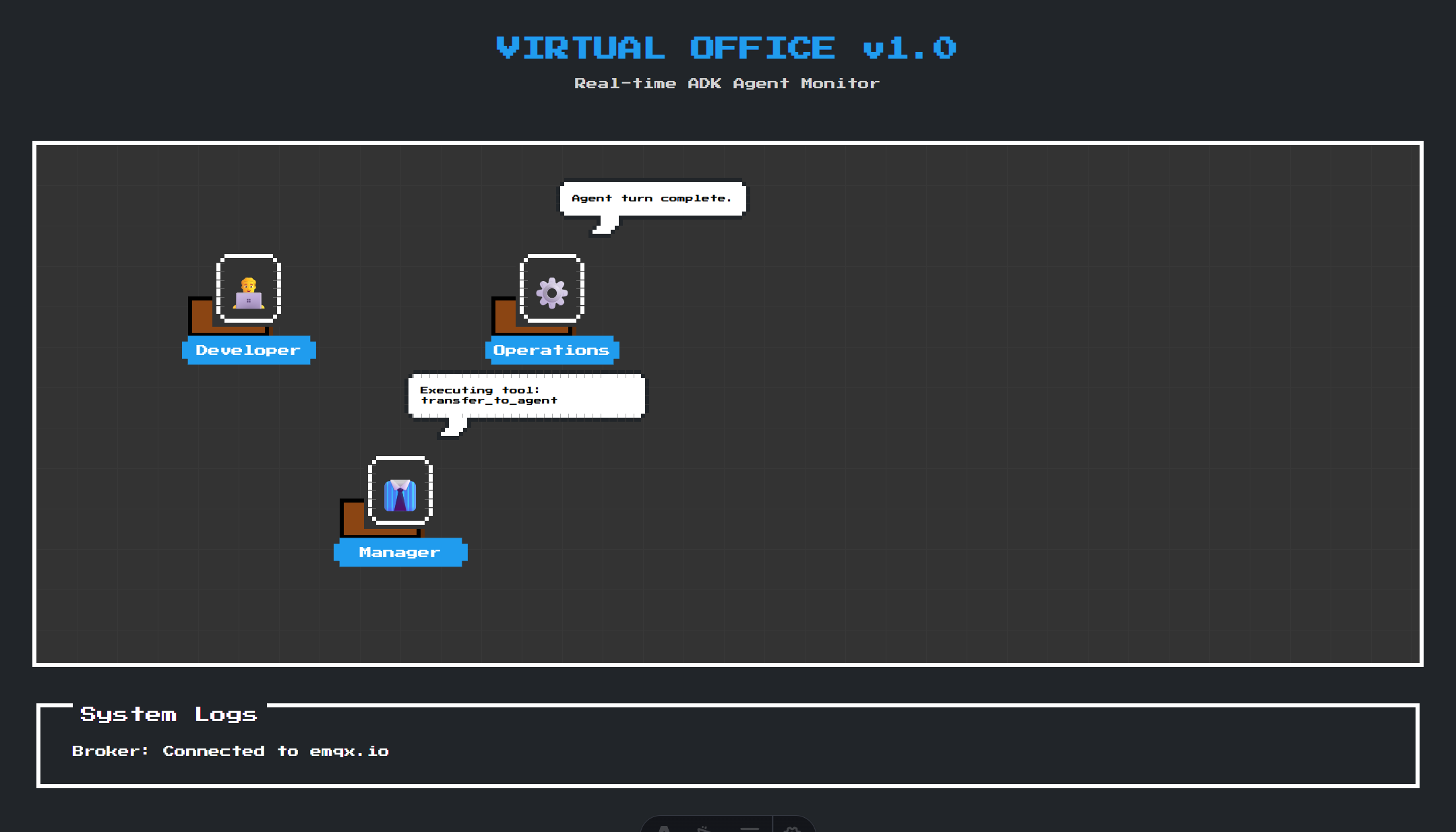
vdesk takes a nostalgic approach to visualization, using a 16-bit aesthetic powered by NES.css. Instead of sterile dashboards or raw log files, you are presented with a pixel-art virtual office where AI agents literally “reside.”
When an agent is working on a task, you might see its character sprite animate or display a “thinking” status bubble. When it’s idle, it rests in its cubicle. This visual layer makes the abstract lifecycle of an AI agent immediately observable and engaging.
The Architecture of vdesk
vdesk is built on a modern, event-driven architecture that ensures real-time synchronization between the agent’s logic and the user interface.
1. Python Backend (vdesk-agents)
The brain of the operation is built using the Google Agent Developer Kit (ADK). This backend defines the agents’ capabilities and logic. Most importantly, it tracks their internal states and publishes updates to specific topics.
2. MQTT Communication
To bridge the gap between the Python backend and the web frontend, vdesk uses MQTT (via a public broker). This lightweight messaging protocol allows the agents to broadcast their status in real-time.
3. Astro Frontend (vdesk-web)
The virtual office itself is a modern web application built with Astro. It subscribes to the MQTT topics and updates the UI instantly. Because Astro is designed for performance, the frontend remains snappy while handling constant state updates.
Key Features at a Glance
- Real-Time Status Indicators: Instant visual feedback on what your agents are doing.
- 16-bit Pixel Art: A charming and intuitive way to monitor complex AI systems.
- NES.css Styling: Consistent retro UI elements that enhance the “virtual office” theme.
- Extensible Design: Built with modular components (ADK and Astro), making it easy to add new agents or office features.
Why Visualizing Agent States Matters
As we move towards more complex multi-agent systems, understanding the interaction between different AI components becomes crucial. vdesk isn’t just a fun experiment; it’s a step toward better AI observability. By making the invisible visible, we can better debug, optimize, and simply appreciate the work these digital coworkers are doing.
Whether you’re an AI developer or just a fan of retro aesthetics, vdesk offers a unique window into the future of agentic applications.
Check out the vdesk repository to learn more about the project and how to set it up yourself.